
ERIS is a UK corporation tax relief designed for loss-making SMEs that carry out a high level of research and development (R&D). It was introduced as part of the reforms to UK R&D tax relief and applies to accounting periods beginning on or after 1 April 2024.
In addition to the SME and loss-making requirements, access to the more generous ERIS scheme requires that the company qualifies as R&D intensive.
What does R&D intensive mean?
In broad terms, a company is considered R&D intensive if its relevant R&D expenditure is at least 30% of its total operating expenditure. Various adjustments are required when calculating this percentage. These include adjustments for capitalised R&D costs and transactions with connected companies. The result is used to determine the company’s total relevant expenditure.
However, as is often the case in tax, the reality is more complex. As a starting point, the 30% test is measured against the aggregated results of your company together with any company connected to it. To do this, you must consider both the qualifying R&D expenditure and total operating expenditure of each connected company as per the below.
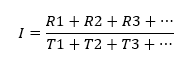
R is the relevant R&D expenditure for each company being considered.
T is the total relevant expenditure for each company being considered.
What is relevant R&D expenditure?
This is expenditure which, if the intensity condition were met, would be treated as “Chapter 2 qualifying expenditure*” for the purposes of calculating the additional 86% deduction.
Broadly, we take this as expenditure attributable to R&D undertaken by the company –
- incurred on staffing costs
- incurred on software, data licences, cloud computing services or consumable items,
- qualifying expenditure on externally provided workers, or
- incurred on relevant payments to the subjects of a clinical trial
The key point is that you do not need to have made an R&D claim on these costs or even be capable of making a claim on them, for them to be included. As a result, overseas group companies may still have relevant R&D expenditure despite not being within the scope of UK corporation tax.
What about total relevant expenditure?
As a starting point you should include any expenditure recognised in your company’s profit and loss account or income statement above the “profit before tax” line.
You should also include any amounts recognised as an intangible asset on which a section 1308 election has subsequently been made, less any amortisation recognised in the period relating to expenditure covered by a section 1308 election.
Finally, you must then exclude expenditure consisting of a payment or other transfer of value to a connected company. This would include amounts recognised in relation to inter-company bad debt provisions.
My company is standalone. Working out my R&D intensity should be simple, right?
In most cases calculating your R&D intensity should be relatively straightforward. However, the definition of connected company for this purpose is wider than many businesses expect and your qualification as R&D intensive may be impacted by how your company has been funded.
Whether two companies are connected or not ultimately comes down to control. Ordinarily, a person has control if they have the power to ensure the company’s affairs are run in line with their wishes. This power typically comes through holding shares or voting rights or via rights granted by the company’s articles of association or other governing documents.
However, the definition of control expands beyond this and can include instances where a person is entitled to the majority of the company on a distribution or have the right to acquire the majority of the assets on a winding up,
I have issued preference shares to a new investor. Am I impacted?
Potentially, yes.
If a single investor holds more than 50% of a class of shares which provide a liquidation preference, they could be deemed to have control and therefore be connected to it for the purposes of the R&D intensity calculation.
This could have a significant and determinantal impact on a company’s R&D intensity particularly if the investor is large themselves.
If you have issued a number of different classes of shares, we recommend seeking advice ahead of making any claim to determine whether your R&D intensity has been inadvertently impacted by its shareholder structure.
Need help navigating the ERIS rules?
Determining whether your company qualifies as R&D intensive is not always as straightforward as it first appears. The issues highlighted above can all have an unexpected impact on your eligibility for ERIS and the value of any claim.
Whether you are a start-up pursuing Seed or Series A investment, an early-stage innovative business scaling rapidly, or an established company making R&D tax relief claims, it is important to understand how these rules apply to your specific circumstances before submitting a claim.
Our Business Tax team works with innovative businesses across a range of sectors, helping them maximise available reliefs while navigating the technical complexities of the R&D tax regime. We can help you assess your R&D intensity position, review the impact of investment arrangements and share structures and provide support throughout the R&D claim process.
If you would like to discuss your eligibility for ERIS or any aspect of your R&D tax relief claim, please get in touch with our Business Tax team. We’d be happy to help.
*This broadly includes staffing costs, software, data licences, cloud computing services, consumables, externally provided workers, certain subcontracted R&D costs and payments to clinical trial volunteers.